
Advertisement

Opinion | Mahathir’s new Malay dilemma: tackle poverty among the majority without excluding others, particularly the Chinese

Forty-eight years after his book diagnosing the problems ethnic Malays faced, Mahathir Mohamad is once again leading a country where Malays are still mostly poor, despite a decades-old economic policy that has favoured them and angered other groups

Reading Time:4 minutes
Why you can trust SCMP
3
Illustration: Tim McEvenue
After the stunning May 9 electoral upset of the ruling government, some Malaysians are eager to roll back the country’s bumiputra policies, or preferential policies for Malays and indigenous people. But “New Malaysia” chief architect and once-again Prime Minister Mahathir Mohamad has cautioned haste, countenancing that the Malays have yet to achieve economic parity, specifically with the ethnic Chinese.
Now taking shape as a protracted lifelong struggle, Mahathir's Malay rights campaign began at around the same time that the civil rights movement in the United States successfully enacted affirmative action to extend equal opportunities for black Americans.
Advertisement

The burden weighing upon Mahathir, then a young backbencher, was to counteract a numerically inverted disparity: of a weak majority marginalised by dominant minorities.

In The Malay Dilemma, Mahathir, a trained medical doctor, critically dissected the weaknesses of his own race and warned that without government aid, the bumiputra (a Malay word meaning “sons of the land”) would become subservient in their own land. This dire diagnosis coloured the Malaysian outlook, leading to the promulgation of the New Economic Policy to boost the prospects of the Malays.
Advertisement
Half a century on, ethnicity-based preferential programmes are facing resistance. In the US, working-class whites complain that affirmative action is unfair. Likewise, Chinese and Indians in Malaysia are protesting against restricted access to public-sector employment and universities. Opponents of affirmative action say any form of discrimination, whether for or against any race, is a violation of fundamental human rights.
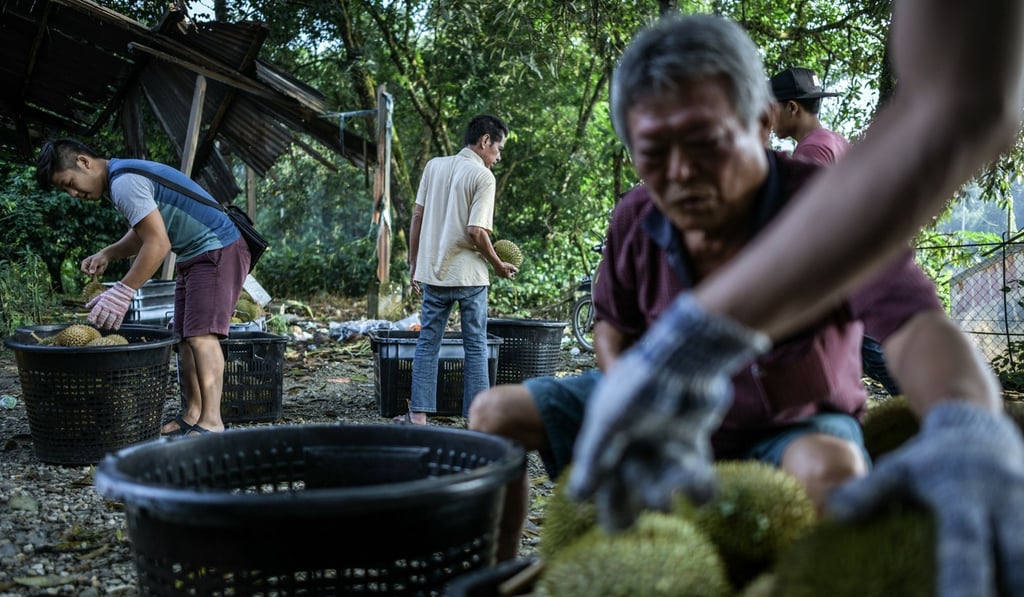
Malaysian workers divide durians into baskets at a farm in Karak, outside Kuala Lumpur in the nearby Pahang state, on July 24. Photo: AFP
Advertisement
Select Voice
Choose your listening speed
Get through articles 2x faster
1.25x
250 WPM
Slow
Average
Fast
1.25x